

International Animation Day (Oct 28): Origins and 5 Fun Facts from Hand-Drawn Frames to Toy Story
Your favourite childhood cartoon, the anime you binge in one weekend, the bouncy stickers you send in chat every day — they all share one root: still pictures brought to life. Every year on October 28, fans around the world celebrate International Animation Day, marking one of the first times animated drawings were projected for a paying audience more than 130 years ago. Here is how it all began — and how to celebrate at home.
In short: International Animation Day falls on October 28. It was proclaimed in 2002 by ASIFA, the International Animated Film Association, to commemorate October 28, 1892, when Charles-Émile Reynaud first showed hand-drawn animation to the public with his Théâtre Optique at the Musée Grévin in Paris. Today it is celebrated in more than 50 countries.
What is International Animation Day, and who started it?
It is not a public holiday but a celebration for everyone who loves animation. ASIFA (Association Internationale du Film d'Animation), the global animation body based in Annecy, France, proclaimed it in 2002 to bring attention to the art form worldwide.
Screenings, workshops, exhibitions and technique demonstrations take place in more than 50 countries — over a thousand events in all.
ASIFA commissions a new poster every year, which each country adapts for its own events.
In 2026, October 28 is a Wednesday, so many cities hold events over the nearest weekend.
October 28, 1892: Émile Reynaud's "optical theatre"
Before cinema as we know it, French inventor Charles-Émile Reynaud patented the Théâtre Optique in 1888. Hand-painted images were placed on a long band wound around a spool and cranked past a projector and mirrors, so the pictures appeared to move on a screen.
On October 28, 1892, at the Musée Grévin in Paris, Reynaud opened Pantomimes Lumineuses: three short cartoons — Pauvre Pierrot, Un bon bock and Le Clown et ses chiens. Each used around 500–600 images and ran about 15 minutes, with Reynaud operating the machine live and a pianist playing along. The show ran until 1900 and drew roughly half a million viewers.
Fun fact: the Lumière brothers' cinematograph, which arrived in 1895, used photography — far faster than drawing every frame — and audiences gradually moved on. But Reynaud is remembered as a pioneer of on-screen animation, and his debut is the reason we celebrate on this date.
A 5-step timeline: from blackboard to computer
1892 – Théâtre Optique: hand-drawn cartoons projected for an audience in Paris, the origin of International Animation Day.
1908 – Fantasmagorie: Émile Cohl's film, considered by film historians one of the first animated cartoons, used about 700 drawings, each shot twice, for under two minutes of chalkboard-style animation.
1937 – Snow White and the Seven Dwarfs: Disney's first full-length animated feature and America's first, premiering on December 21, 1937.
1988 – Tin Toy: a Pixar short that became the first computer-animated film to win an Academy Award.
1995 – Toy Story: released November 22, 1995, as the world's first computer-animated feature film, opening at number one.
Steve Jobs and Pixar: when a computer maker changed cartoons
Most people know Steve Jobs for the iPhone, but in 1986 he bought Lucasfilm's computer division from George Lucas and turned it into an independent company called Pixar, with about 40 employees. Ed Catmull led the company, and John Lasseter was its rising director. That same year Lasseter's short Luxo Jr., starring a desk lamp, debuted at SIGGRAPH — and the lamp became the studio's symbol.
Less than a decade later, Toy Story proved that a film made entirely on computers could make audiences laugh and cry just like hand-drawn animation. In 2006 Jobs sold Pixar to The Walt Disney Company. The story shows that technology and art move forward together — just as Reynaud used a machine to put drawings on screen more than a century earlier.
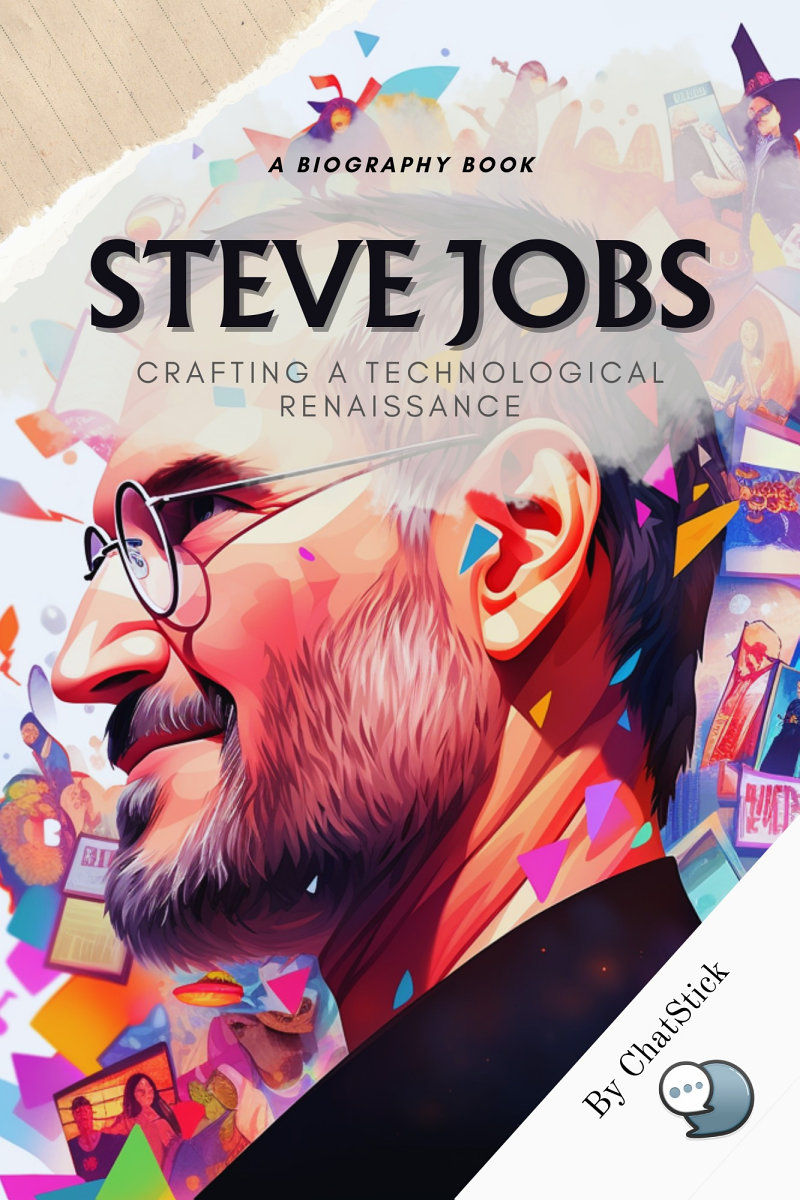
Want to go deeper? If you enjoy behind-the-scenes stories like this, try Steve Jobs: Crafting a Technological Renaissance, a 195-page eBook by ChatStick Team on Jobs' impact on personal computing, animated movies, phones, music and tablets, comparing him with Renaissance figures who blended science and art. Read a free sample on Google Play Books.
5 ways to celebrate International Animation Day at home
Make a flipbook: draw a bouncing ball on the corner of a sticky-note pad, moving it a little on each of 12–20 pages, then flick through quickly — the same principle as the earliest cartoons.
Run a through-the-ages marathon: watch an early silent cartoon, then a classic hand-drawn feature, then your favourite CG film, and notice how far the craft has come.
Try a stop-motion app: photograph toys or modelling clay one frame at a time, moving them slightly between shots — you'll have your own short film in an afternoon.
Practise character colour: every animated film needs someone to choose the palette of its characters and scenes. Colouring anime-style line art is a relaxing way to practise palettes, light and shadow.
Look for local events: around late October, art schools, cinematheques and universities worldwide host screenings and workshops — check the ones near you.
For idea 4 without drawing your own lines, Cozy Cottagecore Anime Girls Coloring Book by ChatStick Team is a digital PDF of 40 anime-style illustrations set in forests and nature — print at home or colour on a tablet.
What's your all-time favourite animated film?
Classic hand-drawn, Japanese anime or CG — which one can you rewatch forever? Tell us in the comments and share this article with a cartoon-loving friend before October 28.
Frequently asked questions (FAQ)
When is International Animation Day?
October 28 every year. In 2026 it falls on a Wednesday.
Why October 28?
On October 28, 1892, Charles-Émile Reynaud first showed hand-drawn animation to the public with his Théâtre Optique at the Musée Grévin in Paris. ASIFA chose the date when it proclaimed the day in 2002.
What was the first animated cartoon?
It depends on the definition. Reynaud's 1892 show was a pioneering projection of moving drawings, while Émile Cohl's Fantasmagorie (1908) is often cited as one of the first animated cartoons on film.
What was the first computer-animated feature film?
Pixar's Toy Story, released on November 22, 1995, was the first feature-length film made entirely with computer animation.
Sources: ASIFA-Japan · timeanddate.com · National Today · Pixar: Our Story · Britannica (Pixar) · EBSCO (Snow White) · Wikipedia (Fantasmagorie)
The books recommended in this article are made by the ChatStick team. Browse all ChatStick Team eBooks on Google Play Books


Comments